Personalized Learning in India Didn't Fail. Schools Just Called Worksheets "Personalization" and Pat Themselves on the Back.
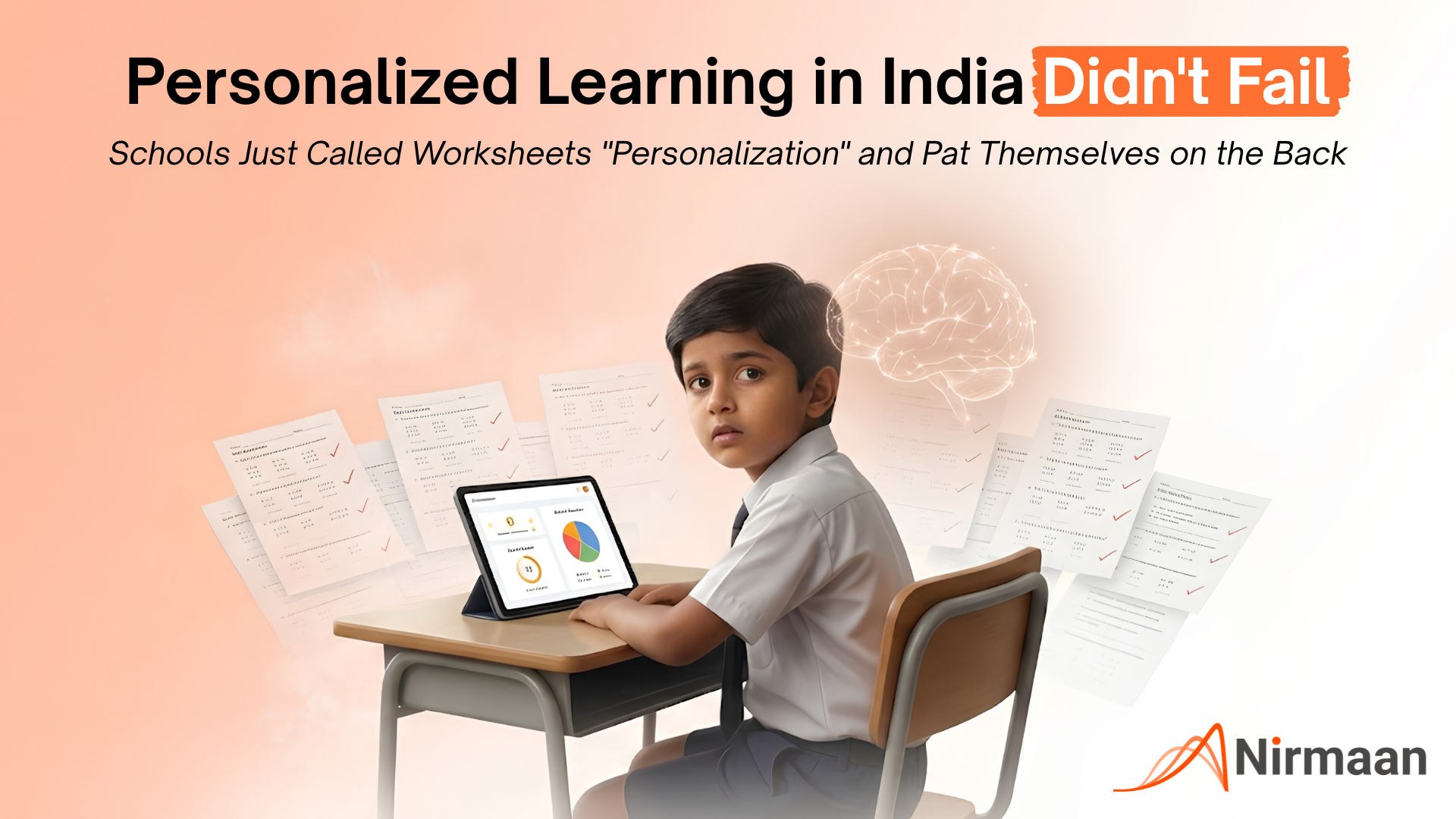
You've seen the pitch. A hundred EdTech companies promised to "personalize learning" for your child. You bought the subscription. Your kid got a dashboard, a streak counter, and endless worksheets that adjusted in difficulty by one notch. That's not personalization. That's a spreadsheet with animations. And until recently, that's all Indian schools had access to, so they pretended it was enough.
The "Personalization" That Wasn't
Here's the uncomfortable truth. Schools have been claiming personalized learning since 2015, but the numbers expose the lie.
India's EdTech funding hit $16 billion between 2014 and 2022. Yet learning outcomes flatlined. ASER 2023 found that 73% of Class 3 students cannot read Class 2 level text. Same as five years ago. All that money. All those dashboards. Zero progress.
Why? Because "adaptive" usually meant this: if a child got three fraction problems wrong, the app served four more fraction problems. Same method. Same explanation. Same failure loop. The system adjusted quantity, not approach. It never asked why the child struggled, only how many questions they needed.
That's not personalization. That's automation of bad teaching.
What Schools Called Personalization | What It Actually Was |
|---|---|
Leveled worksheets | Same content, different pacing |
Difficulty sliders | More of the same approach |
Learning dashboards | Score tracking, not gap fixing |
Recorded video lessons | Broadcast teaching, not response teaching |
Why Real Personalization Was Impossible (Until Now)
The honest reason personalized learning failed: teachers cannot individually diagnose 40 students across 5 subjects in real time. No human can. A Class 5 math teacher sees 200+ competencies to track per child. Multiply by 40 students. That's 8,000 data points. Daily.
So teachers did what humans do. They taught to the middle. They identified obvious strugglers and obvious stars. The vast middle? Guessing. Small gaps compounded into chasms by Class 8. Then everyone acted surprised when board exam results cratered.
Some will say teachers need better training. Fair. But training for impossible tasks is cruelty, not improvement. You don't train someone to memorize 8,000 daily data points. You build systems that handle the memory so humans handle the response.
That's the shift. Not better worksheets. Not louder lectures. Systems that see patterns teachers cannot see, so teachers can teach instead of administrate.
What "Now" Actually Looks Like
Three things changed. Cheap computing. Actually usable AI. And regulatory alignment.
NEP 2020 demanded formative assessment and competency tracking. CBSE's latest frameworks require continuous evaluation, not annual exams. The policy finally matches what technology can now deliver: real-time mapping of what each child actually understands, not what they scored on last week's test.
Here's what that replaces:
Report cards every term → Competency snapshots every session
Remedial classes after failure → Micro-interventions during struggle
Parent-teacher meetings about "effort" → Specific gap discussions with evidence
One-size-fits-all lesson plans → Adjusted pathways based on actual readiness
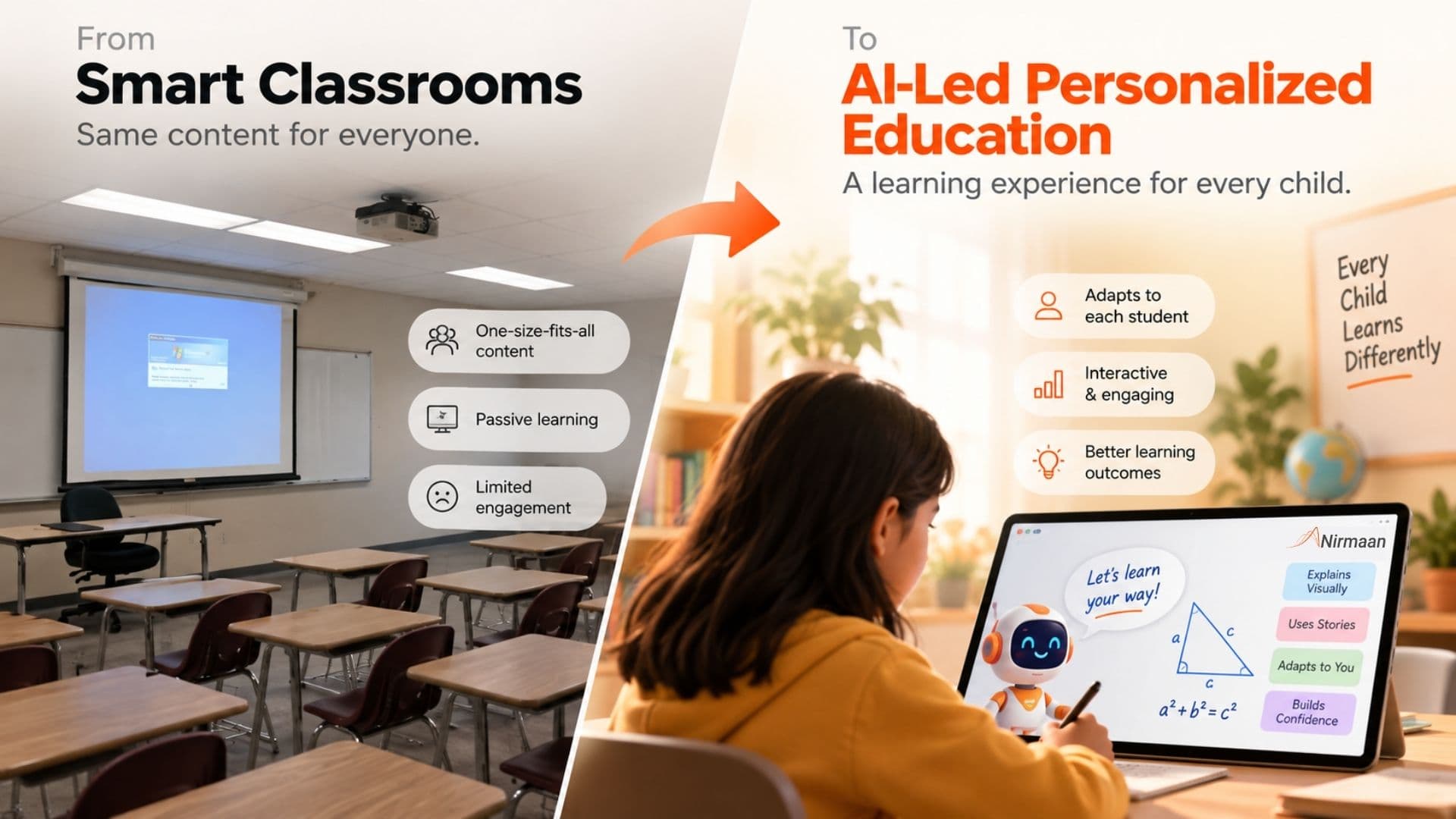
The technology isn't magic. It's specific. Large language models can now hold genuine conversation, not just serve multiple-choice. They can explain a concept three different ways in thirty seconds. They can spot that a child fails division not because of division, but because place value never stuck in Class 3. That diagnosis changes everything. Teachers can finally target the root, not the symptom.
The Hard Part Schools Must Accept
Personalization requires surrender. Schools must stop pretending one teacher can know 40 minds intimately. They must accept that their "experienced" lesson plans, polished over decades, might miss today's specific children. They must share classroom control with systems that see what they cannot.
This is the real resistance. Not cost. Not training. Ego.
I've watched schools demand "personalized learning platforms" then ignore every diagnostic because "we know our students." You don't. Not at the granularity that matters. Not in time to fix what breaks this week.
The schools that will lead the next decade are the ones honest enough to say: we need help seeing. Help doesn't replace teachers. It makes them precise instead of approximate.
The Verdict
Personalized learning didn't fail in India. We failed to build personalization that respected how teachers actually work and how children actually learn. We sold dashboards and called it diagnosis. We sold content libraries and called it customization.
The tools finally exist to map each child's mind in real detail, to explain endlessly without exhaustion, to free teachers for the human work of motivation and connection. But tools require users willing to be helped.
Ask your school this week: "Can you show me exactly what my child understood poorly in math yesterday, and exactly what explanation they received?" If the answer is a vague report card comment or a percentage score, you don't have personalization. You have theater. Demand the real thing.
References
ASER Centre. (2024). Annual Status of Education Report (Rural) 2023.
Ministry of Education. (2020). National Education Policy 2020.
CBSE. (2023). Competency Based Education and Assessment Guidelines.
IVCA-EY-IndusLaw Report. (2023). Indian Private Equity and Venture Capital Annual Report 2022.
World Bank. (2022). Learning Poverty in India: Status and Pathways.
P.S. At Nirmaan, we build the AI that does this actual work: mapping each child's competencies in real time so teachers stop guessing and start knowing. Not dashboards. Diagnosis. Not content dumps. Conversational teaching that adapts to how one specific child learns right now.